
Brooklyn Museum Arts of Africa Galleries
The Brooklyn Museum's new presentation of the Arts of Africa is a living, active collection representing a wide range of forms, materials, time periods, and geographic regions—integrating classical sculpture with contemporary art from across the continent.
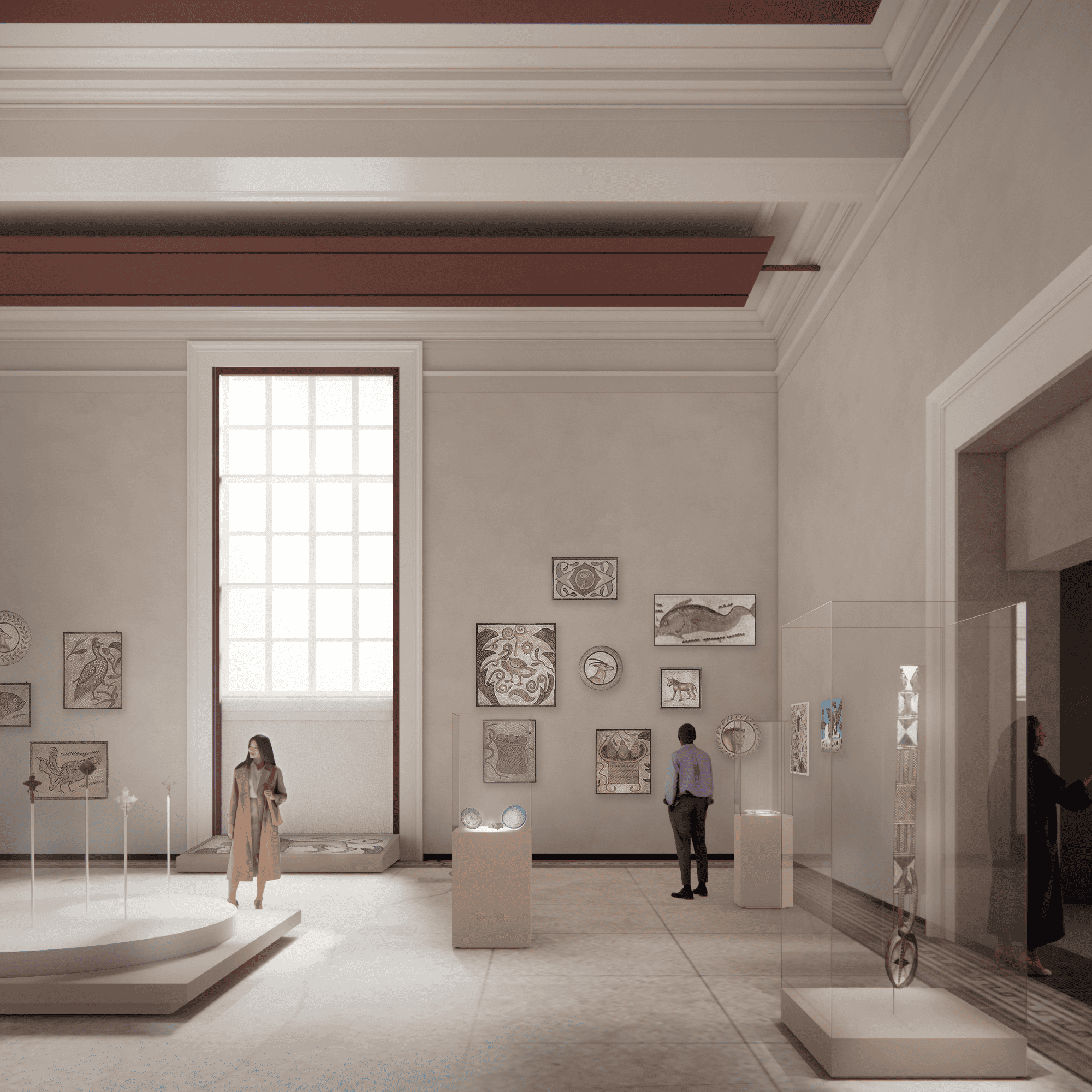
This layering of old and new, and the embrace of complexity and diversity within African arts, is mirrored in the architectural expression of the new galleries themselves. Peterson Rich Office's approach centers on a fundamental principle: rather than imposing uniformity across the 6,400-square-foot sequence of four galleries, the design celebrates the distinctive character of each space. Constructed across different eras of the Brooklyn Museum's architectural history, these rooms vary dramatically in ceiling height, proportion, structural system, and historic detail. The first gallery occupies a soaring 25-foot-tall space from the historic East Wing, constructed in 1904 by McKim, Mead & White—a massive volume with 23 foot tall windows that flood the space with filtered daylight and traditional moldings that speak to the building's Beaux-Arts heritage. Adjacent galleries from the 1920s offer more intimate scales and different spatial qualities. Each room tells a story of the museum's evolution, and PRO's design strategy is to honor these individual narratives while connecting them into a cohesive new gallery experience.
Contemporary Layers in Historic Spaces
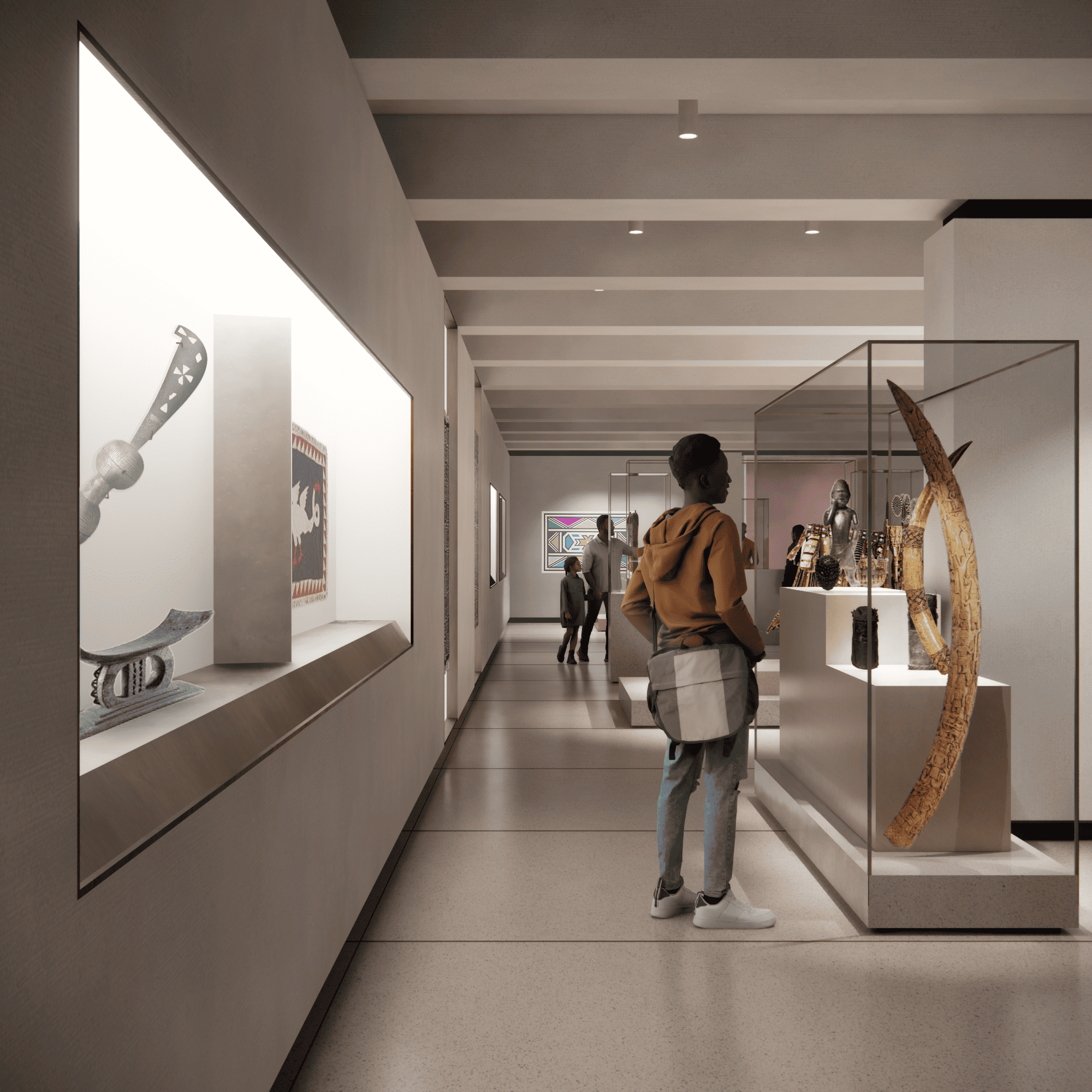
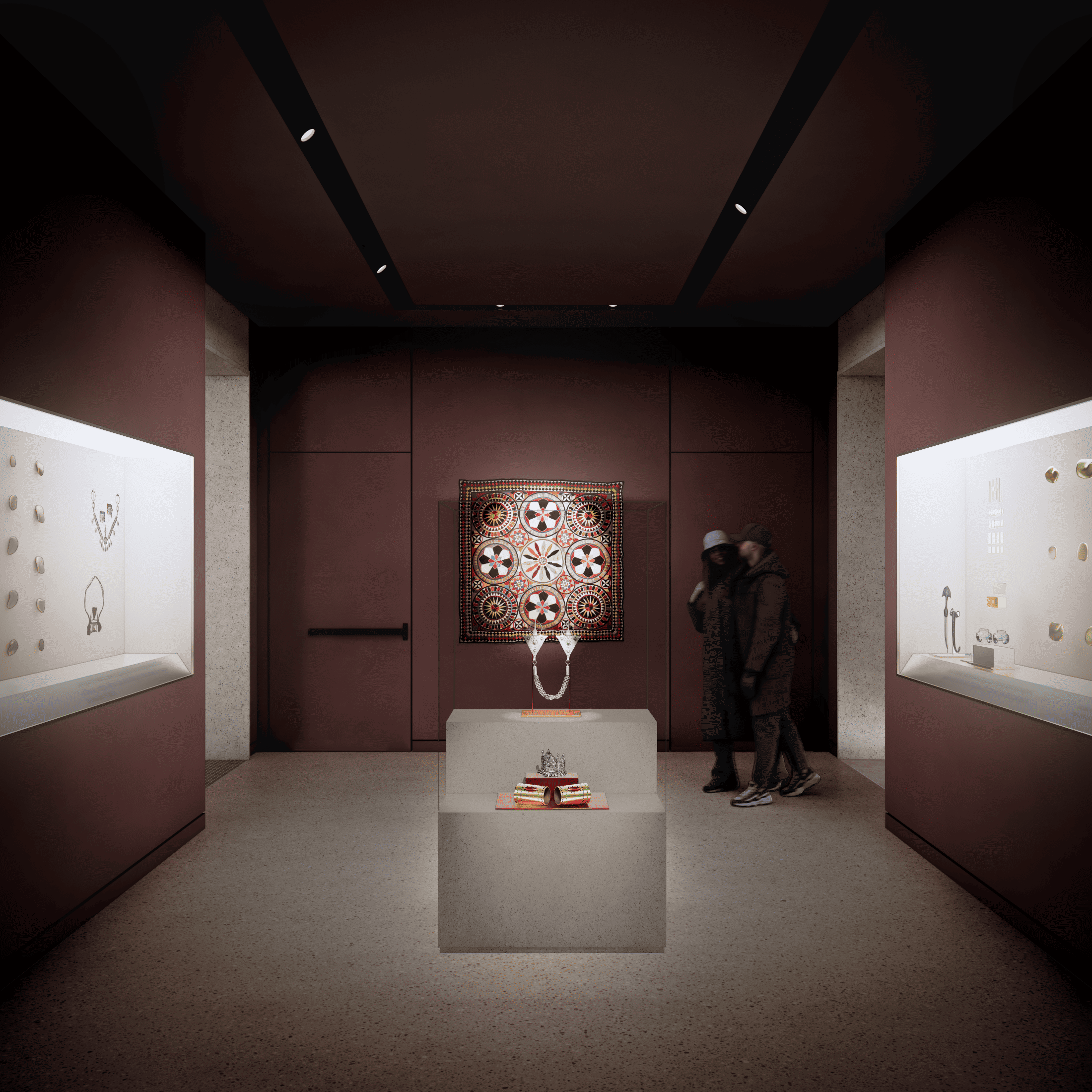
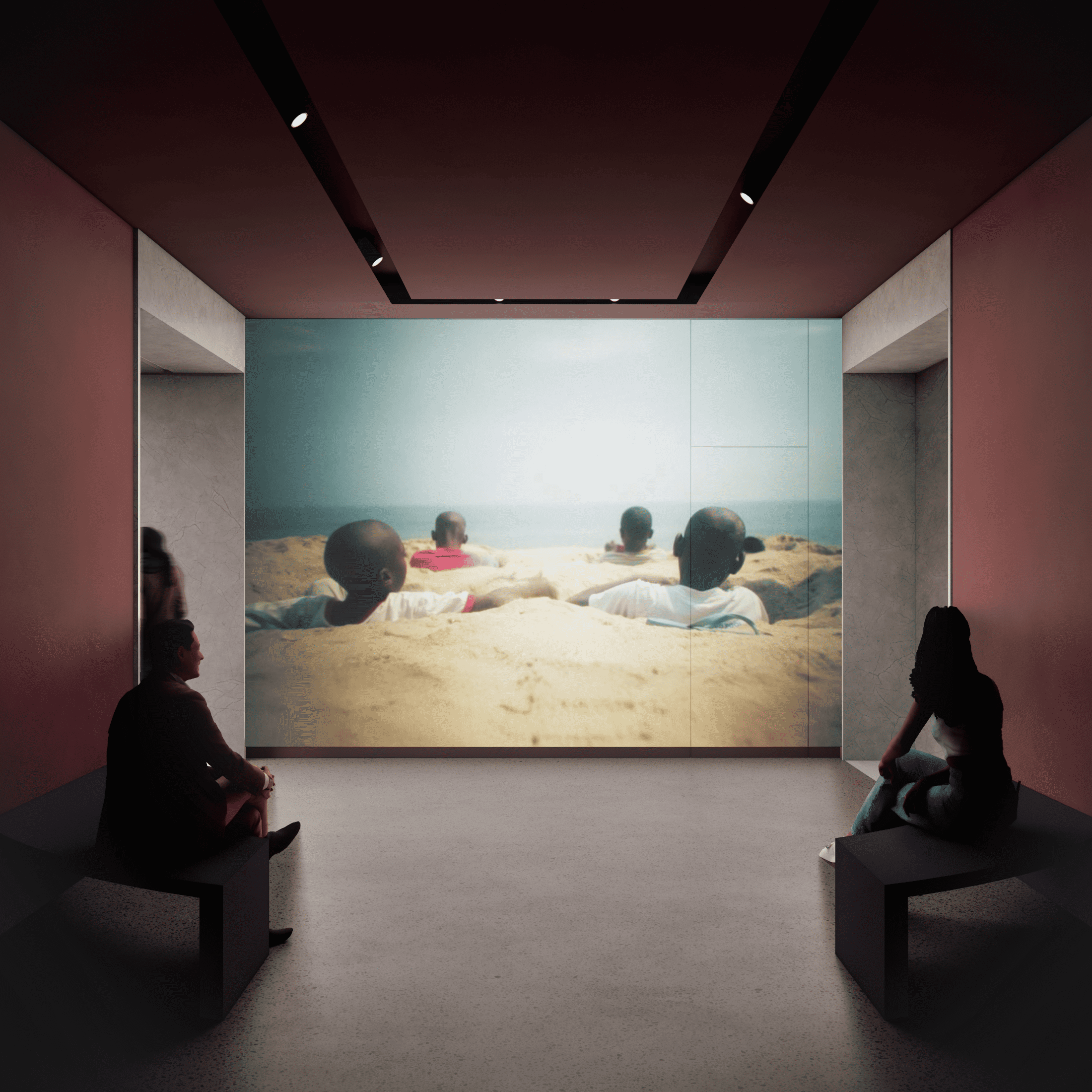
The renovation introduces contemporary infrastructure throughout—lighting systems and climate control, essential for displaying world-class art in the 21st century. Rather than concealing these modern necessities, PRO exposes and celebrates them as a new architectural layer. All new metal elements are finished in a rich accent color that creates moments of bold contemporary contrast within the otherwise historic spaces. This strategy transforms functional systems into deliberate design elements, establishing a clear visual language that distinguishes what is new from what is historic. The contemporary layers read as an honest expression of the building's ongoing life, acknowledging that the museum continues to evolve and adapt while respecting the architectural integrity of its past.
This approach creates a dynamic interplay across the gallery sequence: historic plaster ceilings and moldings coexist with contemporary materials, traditional proportions frame modern display strategies, and natural daylight mingles with precisely calibrated artificial illumination. The architectural heterogeneity—rather than being smoothed over or erased—becomes an asset, mirroring the collection's own embrace of diversity across time, geography, and artistic tradition.
Restoring Historic Connections
A critical component of the project involves reopening an historic enfilade that once connected spaces around the museum's iconic Beaux-Arts Court. By removing doors and clearing infilled openings, PRO restores both visual sightlines and physical circulation paths that were part of the museum's original 1893 design. This architectural gesture carries profound programmatic significance: the enfilade directly connects the Brooklyn Museum's world-renowned Egyptian galleries to the new Arts of Africa galleries, creating a continuous ring of exhibition spaces around the Beaux-Arts Court.
This spatial reunification allows visitors to experience North Africa and the broader continent as an integrated whole—a conceptual continuity that reflects contemporary scholarship but remains rare in encyclopedic museums, where Egyptian and African collections are typically presented in isolation from one another. The architectural intervention thus becomes more than a restoration of historic circulation; it becomes an argument about cultural geography and art historical narrative, embedded in the very fabric of the building.
Through material expression, spatial sequence, and restored connections, the new Arts of Africa galleries embody PRO's belief that adaptive reuse is not about choosing between old and new, but about creating productive dialogue between them. The spaces honor the Brooklyn Museum's layered architectural history while establishing a framework flexible enough to serve the collection's continued growth and evolution. In doing so, the architecture itself participates in the broader mission of the Museum: to present African art not as static artifacts, but as part of an ongoing, dynamic conversation that continues to shape our world and engage diverse audiences.
The Brooklyn Museum's new presentation of the Arts of Africa is a living, active collection representing a wide range of forms, materials, time periods, and geographic regions—integrating classical sculpture with contemporary art from across the continent.
Contemporary Layers in Historic Spaces
The renovation introduces contemporary infrastructure throughout—lighting systems and climate control, essential for displaying world-class art in the 21st century. Rather than concealing these modern necessities, PRO exposes and celebrates them as a new architectural layer. All new metal elements are finished in a rich accent color that creates moments of bold contemporary contrast within the otherwise historic spaces. This strategy transforms functional systems into deliberate design elements, establishing a clear visual language that distinguishes what is new from what is historic. The contemporary layers read as an honest expression of the building's ongoing life, acknowledging that the museum continues to evolve and adapt while respecting the architectural integrity of its past.
This approach creates a dynamic interplay across the gallery sequence: historic plaster ceilings and moldings coexist with contemporary materials, traditional proportions frame modern display strategies, and natural daylight mingles with precisely calibrated artificial illumination. The architectural heterogeneity—rather than being smoothed over or erased—becomes an asset, mirroring the collection's own embrace of diversity across time, geography, and artistic tradition.
Restoring Historic Connections
A critical component of the project involves reopening an historic enfilade that once connected spaces around the museum's iconic Beaux-Arts Court. By removing doors and clearing infilled openings, PRO restores both visual sightlines and physical circulation paths that were part of the museum's original 1893 design. This architectural gesture carries profound programmatic significance: the enfilade directly connects the Brooklyn Museum's world-renowned Egyptian galleries to the new Arts of Africa galleries, creating a continuous ring of exhibition spaces around the Beaux-Arts Court.
This spatial reunification allows visitors to experience North Africa and the broader continent as an integrated whole—a conceptual continuity that reflects contemporary scholarship but remains rare in encyclopedic museums, where Egyptian and African collections are typically presented in isolation from one another. The architectural intervention thus becomes more than a restoration of historic circulation; it becomes an argument about cultural geography and art historical narrative, embedded in the very fabric of the building.
Through material expression, spatial sequence, and restored connections, the new Arts of Africa galleries embody PRO's belief that adaptive reuse is not about choosing between old and new, but about creating productive dialogue between them. The spaces honor the Brooklyn Museum's layered architectural history while establishing a framework flexible enough to serve the collection's continued growth and evolution. In doing so, the architecture itself participates in the broader mission of the Museum: to present African art not as static artifacts, but as part of an ongoing, dynamic conversation that continues to shape our world and engage diverse audiences.


Miriam Peterson
Nathan Rich
Jahaan Scipio
Ethan Kaplan
Zackary Bryson
Peik Shelton
Daniel Kendra